

In today’s digital world, cybersecurity has become one of the most critical concerns for nonprofit organizations. From donor databases and financial records to volunteer information and internal communications, nonprofits manage large amounts of sensitive data every day. Unfortunately, cybercriminals increasingly target nonprofit organizations because many operate with limited IT resources and outdated security systems.
A single cybersecurity breach can lead to devastating consequences, including financial losses, reputational damage, operational disruptions, legal issues, and loss of donor trust. As nonprofits across New York continue embracing cloud computing, remote work, and digital fundraising platforms, the need for strong cybersecurity measures has never been greater.
Many nonprofit leaders mistakenly assume cyberattacks only affect large corporations. However, small and mid-sized organizations are often easier targets because they may lack advanced security protections and dedicated IT teams. This makes proactive cybersecurity planning essential for organizations of all sizes.
Modern threats such as ransomware, phishing attacks, data breaches, malware infections, and email fraud continue evolving rapidly. Without proper defenses, nonprofits risk exposing confidential donor information, financial records, and operational systems.
In this comprehensive guide, we’ll explore the importance of cybersecurity for nonprofits, common cyber threats, effective protection strategies, cloud security solutions, employee training practices, and how professional IT support helps organizations maintain strong digital security.
Cybercriminals increasingly target nonprofit organizations because they often manage sensitive information while operating with limited technical infrastructure.
Common nonprofit data includes:
Weak cybersecurity systems create opportunities for hackers to steal data, disrupt operations, or demand ransom payments.
As nonprofit organizations expand digital operations, maintaining strong security controls becomes essential for protecting organizational integrity and public trust.
A serious cybersecurity incident can create both immediate and long-term consequences.
Potential impacts include:
| Cybersecurity Risk | Possible Consequence |
|---|---|
| Data breach | Loss of confidential information |
| Ransomware attack | Operational shutdown |
| Phishing scams | Financial theft |
| System downtime | Reduced productivity |
| Reputation damage | Loss of donor trust |
Even a small security incident can significantly impact nonprofit fundraising and community confidence.
Phishing attacks remain one of the most common cybersecurity threats facing nonprofit organizations.
Cybercriminals often send fraudulent emails pretending to be:
These emails may attempt to steal passwords, financial information, or confidential records.
Employee awareness training plays a critical role in reducing phishing-related risks.
Ransomware is a dangerous form of malware that locks organizational systems until payment is made.
Nonprofits experiencing ransomware attacks may lose access to:
Strong cybersecurity practices such as regular backups and endpoint protection help reduce ransomware risks significantly.
One of the most effective cybersecurity measures is multi-factor authentication (MFA).
MFA requires users to verify identity through multiple methods such as:
This additional layer of security helps prevent unauthorized access even if passwords become compromised.
Weak passwords remain a major cybersecurity vulnerability.
Organizations should require:
Strong password management reduces the likelihood of unauthorized system access.
Many nonprofits now rely heavily on cloud platforms for communication, collaboration, and data storage.
Cloud-based cybersecurity strategies should include:
Cloud systems offer flexibility, but organizations must still maintain proper security controls to protect sensitive data.
Remote work environments create additional cybersecurity challenges for nonprofits.
Remote employees and volunteers may use:
Strong security policies help organizations protect systems while supporting flexible work environments.
Secure VPNs, endpoint protection, and remote access controls are essential for protecting distributed teams.
One of the largest cybersecurity threats involves accidental employee mistakes.
Common examples include:
Even advanced security systems cannot fully protect organizations if employees lack security awareness.
Successful cybersecurity programs involve ongoing staff education and awareness training.
Training topics should include:
| Training Area | Purpose |
|---|---|
| Phishing awareness | Prevent email scams |
| Password security | Reduce account compromise |
| Device protection | Improve endpoint security |
| Data handling | Protect confidential records |
Regular training helps employees recognize and respond appropriately to potential threats.
Even organizations with strong cybersecurity systems should prepare for potential incidents.
Disaster recovery planning may include:
Preparation reduces downtime and improves organizational resilience during security events.
Backups are one of the most important cybersecurity protections against ransomware and data loss.
Organizations should maintain:
Reliable backup systems improve recovery speed and reduce operational disruption.
Many nonprofits must comply with legal and industry-specific data protection regulations.
Depending on services provided, organizations may need to follow:
Strong cybersecurity practices help organizations maintain compliance while reducing legal risks.
Donor trust is essential for nonprofit sustainability.
Protecting donor records through effective cybersecurity measures helps organizations:
Data protection should remain a top priority for all nonprofit organizations.
Many nonprofits lack internal expertise needed to manage advanced cyber security challenges effectively.
Professional IT providers help organizations with:
Managed security services improve protection while reducing internal administrative burdens.
Every nonprofit organization has unique operational and security requirements.
At Iconyx Technology, nonprofits across New York can access customized cyber security solutions, managed IT services, cloud support, and VoIP technologies designed to strengthen digital protection while improving operational efficiency.
Partnering with experienced technology professionals helps nonprofits reduce risks while focusing on their mission and community impact.
Artificial intelligence continues transforming cyber security systems.
AI-powered security tools can help organizations:
Advanced technologies improve protection against increasingly sophisticated cyberattacks.
Modern cyber security strategies increasingly rely on “zero trust” frameworks.
Zero trust security assumes no user or device should automatically receive trusted access without verification.
This approach improves overall organizational security and reduces insider threat risks.
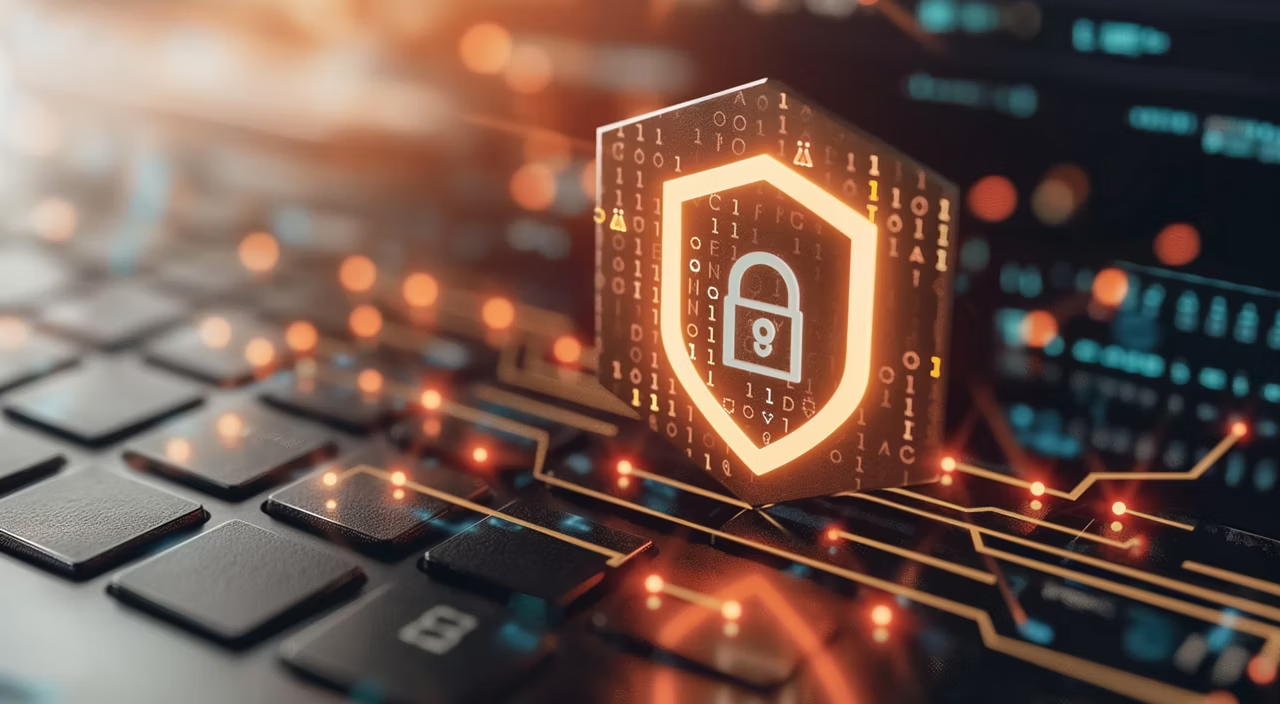
Cyber security involves protecting digital systems, networks, devices, and data from unauthorized access, attacks, and damage.
Nonprofits manage sensitive donor and financial data that cybercriminals may target for theft or fraud.
Common threats include phishing, ransomware, malware, data breaches, and unauthorized system access.
Organizations can improve security through employee training, strong passwords, multi-factor authentication, backups, and professional IT support.
Ransomware is malicious software that locks systems or data until payment is demanded.
Backups help organizations recover quickly after cyberattacks, hardware failures, or accidental data loss.
Yes. Managed IT providers offer monitoring, threat detection, compliance support, and advanced security protections.
As nonprofit organizations increasingly rely on digital systems for fundraising, communication, donor management, and remote collaboration, strong cyber security protection has become essential for long-term success. Cyber threats continue evolving rapidly, and even small organizations face serious risks involving data breaches, ransomware, phishing attacks, and operational disruptions.
Implementing effective cyber security strategies helps nonprofits protect sensitive information, maintain donor trust, improve compliance, and reduce financial risks. From employee training and cloud security to disaster recovery planning and managed IT support, proactive security measures create stronger and more resilient organizations.
For nonprofits across New York, investing in professional cyber security solutions is not just about technology — it is about protecting missions, communities, and the people who depend on organizational services every day.

Empowering your business with complete IT services and solutions management. We provide the high-performance managed IT support and secure technical foundation you need to streamline operations, protect your critical data, and keep your team seamlessly connected anywhere in the world.