Communication is the backbone of every successful nonprofit organization. Whether coordinating volunteers, engaging donors, managing fundraising campaigns, supporting beneficiaries, or collaborating with community partners, reliable communication systems are essential. As technology continues to evolve, many nonprofit organizations throughout New York are replacing traditional phone systems with sip trunking solutions that offer greater flexibility, scalability, and cost savings.
For nonprofit organizations operating on limited budgets, every dollar matters. Maintaining outdated telephone infrastructure often creates unnecessary expenses that divert resources away from mission-critical programs. Modern sip trunking technology provides a practical and cost-effective alternative that allows nonprofits to improve communication capabilities while reducing operational costs.
Today’s nonprofit workforce is increasingly mobile and distributed. Employees may work from headquarters, satellite offices, community centers, fundraising events, or home offices. Effective sip trunking solutions support these evolving workplace models by enabling seamless communication across multiple locations and devices.
As organizations continue embracing cloud communications, unified communications platforms, and hybrid work environments, sip trunking has become a foundational technology that helps nonprofits modernize their operations while maintaining financial responsibility.
In this comprehensive guide, we’ll explore how sip trunking works, why it’s valuable for nonprofit organizations, key benefits, implementation considerations, common challenges, and best practices for maximizing return on investment.
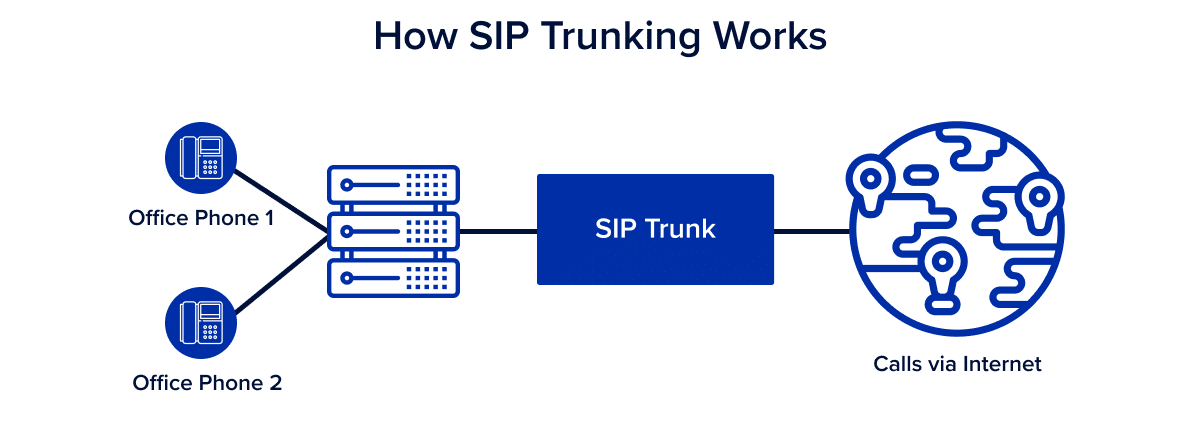
Sip trunking refers to a communication technology that uses the Session Initiation Protocol (SIP) to deliver voice communications over internet connections rather than traditional telephone lines.
Historically, organizations relied on physical phone lines to connect their Private Branch Exchange (PBX) systems to public telephone networks. With sip trunking, those physical connections are replaced by virtual communication channels that operate over broadband internet.
A typical sip trunking deployment allows organizations to:
For nonprofits across New York, sip trunking provides a modern communications framework that supports both current needs and future growth.
Nonprofit organizations face unique operational and financial challenges that make sip trunking particularly attractive.
Most nonprofits must carefully manage expenses. Sip trunking often reduces monthly telecommunications costs compared to traditional phone systems.
As organizations expand programs and outreach efforts, communication demands increase. Sip trunking provides flexibility without requiring expensive infrastructure upgrades.
Many nonprofit teams now operate in hybrid environments. Sip trunking helps maintain seamless communication regardless of employee location.
Reliable communication systems support stronger donor relationships and improve fundraising effectiveness.
Modern sip trunking solutions allow nonprofits to adapt quickly to changing operational requirements.
These factors have made sip trunking a preferred communication strategy for many mission-driven organizations.
One of the most compelling reasons nonprofits invest in sip trunking is the potential for significant cost savings.
Traditional phone systems often involve:
By implementing sip trunking, organizations can frequently reduce many of these recurring costs.
Unlike legacy systems, sip trunking requires fewer physical communication circuits.
Cloud-enabled sip trunking environments generally require less ongoing maintenance than traditional systems.
Savings generated through sip-trunking can be redirected toward mission-focused programs and services.
For nonprofits operating under tight financial constraints, these savings can have a meaningful impact.
The rise of hybrid work has accelerated adoption of sip-trunking technologies.
Employees can access communication systems from multiple locations.
Modern sip-trunking platforms often support smartphones, tablets, and laptops.
Regardless of location, staff members can enjoy the same communication capabilities.
Integrated voice and collaboration tools strengthen teamwork and productivity.
Organizations using sip-trunking are often better equipped to maintain operations during disruptions.
These capabilities are especially valuable for nonprofit organizations serving communities throughout New York.
Strong donor relationships are essential for nonprofit sustainability.
Modern sip-trunking systems help organizations improve donor communications through:
Calls can be routed efficiently to appropriate staff members.
Features such as auto attendants enhance caller experiences.
Teams working from different locations remain connected.
Fundraising and donor engagement initiatives benefit from reliable communication channels.
Organizations leveraging sip-trunking often experience improved communication effectiveness and stakeholder engagement.
Not all sip-trunking services offer the same capabilities.
When evaluating providers, nonprofits should prioritize:
| Feature | Benefit |
|---|---|
| Scalability | Supports organizational growth |
| Reliability | Minimizes communication disruptions |
| Security | Protects sensitive information |
| Disaster Recovery | Enhances business continuity |
| VoIP Integration | Supports modern communications |
| Analytics | Provides communication insights |
Choosing the right sip-trunking provider can significantly influence long-term success.
Cybersecurity is a critical component of any sip-trunking deployment.
Potential risks include:
To strengthen security, nonprofits should implement:
Encrypted communications help protect sensitive information.
Restricting system access reduces risk exposure.
Continuous monitoring supports threat detection.
Additional authentication layers improve security.
A secure sip-trunking environment helps nonprofits protect both communications and organizational reputation.
While sip-trunking offers numerous advantages, implementation requires planning.
Reliable broadband connectivity is essential.
Older phone systems may require upgrades.
Employees may need guidance during the transition process.
Voice traffic must be prioritized for optimal call quality.
Choosing the wrong sip-trunking provider can create long-term challenges.
Proper planning helps organizations avoid these common obstacles.
Throughout New York, nonprofit organizations are increasingly embracing sip-trunking to modernize communications.
Several trends are driving adoption:
As nonprofits continue evolving, sip-trunking remains a valuable technology for supporting communication needs across diverse organizational structures.
Organizations that modernize their communication infrastructure often improve both operational performance and stakeholder satisfaction.
To maximize the value of sip-trunking, nonprofits should follow several best practices.
Evaluate current systems and future requirements.
Select providers familiar with nonprofit technology environments.
Implement comprehensive cybersecurity protections.
Track call quality, reliability, and user satisfaction.
Choose scalable sip-trunking solutions that support future expansion.
Organizations that approach implementation strategically often achieve stronger long-term results.
Modern sip-trunking integrates effectively with other nonprofit technology investments.
Examples include:
This integration helps create a unified technology ecosystem that improves efficiency and supports organizational goals.
For nonprofits seeking digital transformation, sip-trunking serves as a valuable foundation for broader communication and collaboration initiatives.
Sip-trunking is a technology that delivers voice communications over internet connections rather than traditional telephone lines.
Sip-trunking often eliminates many expenses associated with traditional phone infrastructure and long-distance calling.
Yes. Sip-trunking provides affordability, flexibility, and scalability that align well with nonprofit operational needs.
Absolutely. Sip-trunking enables communication across multiple locations and devices.
When properly configured with appropriate security measures, sip-trunking can provide strong communication security.
With adequate network infrastructure, sip-trunking can deliver excellent voice quality.
Yes. Organizations of all sizes can leverage sip-trunking to improve communication efficiency and reduce costs.
As nonprofit organizations throughout New York continue adapting to evolving communication requirements, sip-trunking offers a powerful solution for improving connectivity, reducing costs, and supporting operational flexibility. By replacing outdated telephone infrastructure with modern internet-based communication systems, nonprofits can better serve donors, volunteers, employees, and community stakeholders.
The scalability, affordability, and reliability of sip-trunking make it an ideal choice for organizations seeking to maximize resources while enhancing communication capabilities. Whether supporting hybrid work environments, improving donor engagement, strengthening collaboration, or preparing for future growth, sip-trunking delivers measurable benefits.
At Iconyx Technology, we help nonprofit organizations across New York implement secure, scalable, and cost-effective sip-trunking, VoIP systems, managed IT services, cloud solutions, and cybersecurity strategies designed to support mission-driven success and long-term organizational growth.